MathBlogReferenceArithmetic
Arithmetic Sequence
MathBlog Team March 20, 2017 No Comments
What Is An Arithmetic Sequence?
An arithmetic sequence is an infinite sequence of numbers in which the difference between each pair of consecutive numbers is always the same. For example, in the sequence 1, 3, 5, 7, 9 . . . the difference between one number and the next is always 2.
What is the constant difference (d) between any two consecutive numbers in the following sequences?
-5, -3, -1, 1, 3, 5 . . .
.5, 1, 1.5, 2 . . .
10, 6, 2, -2 . . .
In the first sequence, d = 2 because you can add 2 to any number in the sequence to get the next number. For example, -3 + 2 = -1 and 1 +2 = 3. In the second sequence, d = .5. In the third sequence, each number is 4 less than the previous number, so d = -4.
The Recursive Formula For An Arithmetic Sequence
One way of finding a number within a sequence is to use the recursive formula. To write the formula, we use the following notation:
a is a term in the sequence.
n is the number of terms in the sequence.
d is the constant difference between terms.
Thus, an = an-1 + d
In other words, to find the 5th number in a sequence with a constant difference of 6, we need to know the 4th number (an-1) and add 6 to it. If we are given the sequence 5, 11, 17, 23, and we need to find the next number, we can easily apply this formula by adding 6 to 23 and getting 29. In other words, if d = 6 and if an – 1 = 23, then
an = 23 + 6 = 29
The Explicit Formula For An Arithmetic Sequence
If we only have the first number in a sequence (a1), however, the explicit formula can be a more useful way to find another number in the sequence. To understand how the explicit formula is derived, let’s start with the following sequence where d = -7:
100, 93, 86, 79 . . .
To get the first number, we start with 100 and add -7 zero times. So a1 = 100 + (-7 x 0). To get the second number, we subtract 7 one time. So a2 = 100 + (-7 x 1). The next number in the series is a3 = 100 + (-7 x 2), and so on. Each time we are adding -7 exactly one less time than the number of terms in the sequence. Therefore, we can write a general formula to express this pattern as follows:
an = a1 + (n-1) x d
If we want to find, for example, the 17th number in a series that begins with 3 and has a constant difference of .5, we can plug that information into the formula like this:
a17 = 3 + (17-1) x .5 = 11
Practice
Problem 1: What is the constant difference (d) in the following sequence?
24, 32, 40, 48, 56 . . .
Solution: In this sequence d = 8 because we can add 8 to each number to get the next number.
Problem 2: What is the next number in the sequence above?
Solution: Using the recursive formula, we know that the 6th number (a6) is equal to the 5th number (a6-1) plus the constant difference (d). Since 56 + 8 = 64, the next number in the series is 64.
Problem 3: Write an explicit formula for the sequence in Problem 1 and use that formula to find the 11th number in the sequence.
Solution: Since an = 24 + (n-1) x 8, and n = 11, then a11 = 24 + (11-1) x 8 = 104.
Advanced optics investigates wave interference, diffraction, polarization, nonlinear light propagation, and quantum photon interactions within optical systems.

1
/
of
1
SkillBoost-NW-1025
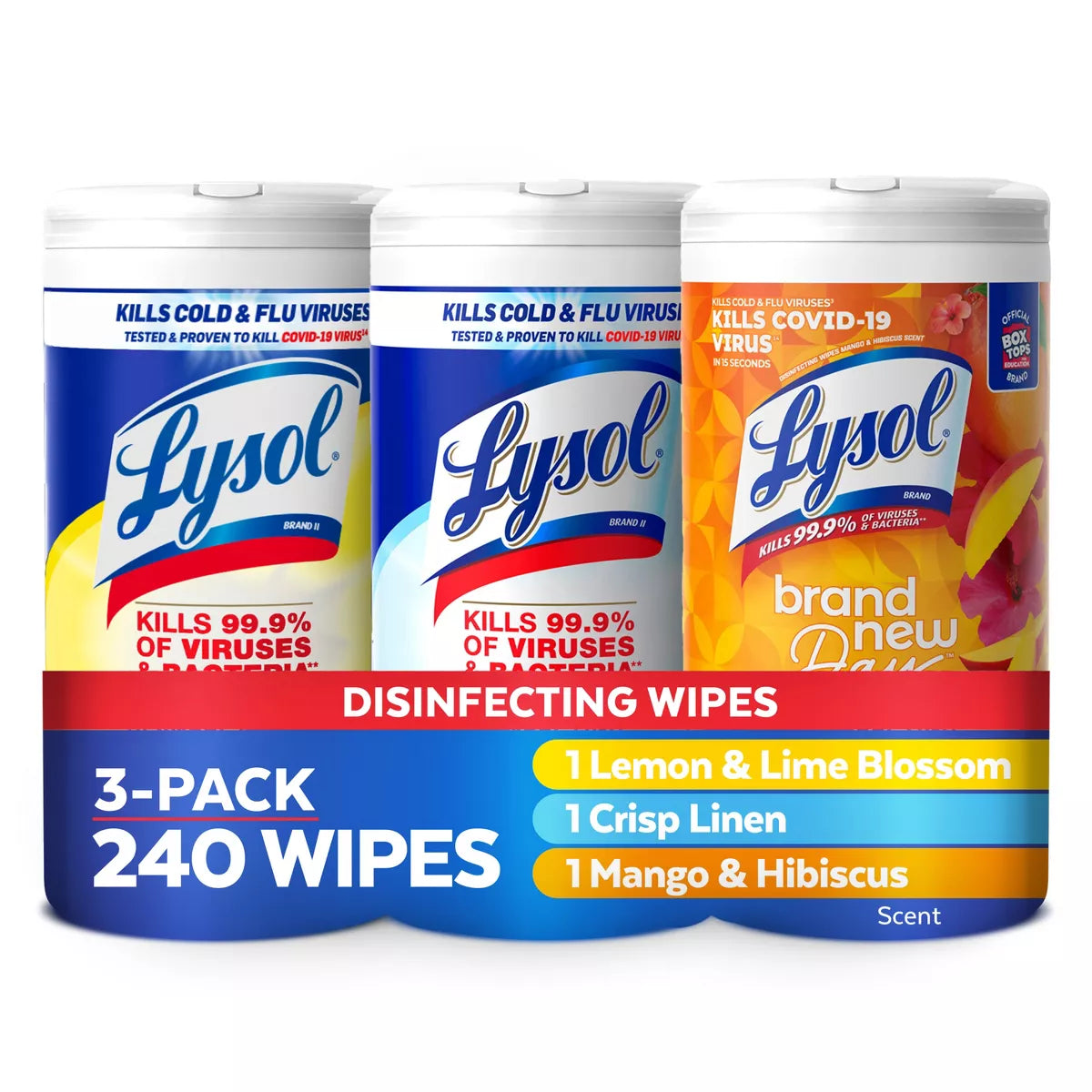
Lysol Disinfecting Wipes - Lemon/Crisp Linen/Mango and Hibiscus - 80ct
Lysol Disinfecting Wipes - Lemon/Crisp Linen/Mango and Hibiscus - 80ct
Regular price
Rs. 893.00 INR
Regular price
Rs. 993.00 INR
Sale price
Rs. 893.00 INR
Quantity
Couldn't load pickup availability
Description
Lysol Disinfecting Wipes can be used as a convenient way to clean and disinfect your household surfaces. Each pre-moistened disposable disinfecting wipe kills 99.9% of germs when used as directed. No bottles, no sponges, no mess. Lysol Disinfecting Wipes are great for cleaning most surfaces and disinfecting surfaces. These Lysol Wipes kills 99.99% of all viruses and bacteria, including the following: Cold and Flu Viruses, Salmonella Enterica (Salmonella), Influenza A Virus, Herpes Simplex Virus Type 1, Respiratory Syncytial Virus, and COVID-19 when used as directed on hard, non porous surfaces. Each cleaning disinfecting wipe kills cold and flu viruses and helps stop the spread of germs, perfect for touch-up cleaning. Lysol Wipes are also approved to remove more than 95% of allergens. Like germs, allergens exist on hard surfaces. Use Lysol wipes as directed. These disinfecting wipes are even suitable to use on wood. How to Use Lysol Disinfecting Wipes? Pre-clean surface. Use enough fresh disinfectant wipe to thoroughly wet the surface. To Sanitize with these cleaning wipes: Allow to remain wet for 10 seconds. To disinfect with these cleaning wipes: Allow to wet for 4 minutes. To clean and remove allergens with these cleaning wipes: Use fresh wipe on surface. For surfaces that come in contact with food, rinse thoroughly with water. Repeat for stubborn stains. For more than a century, Lysol has been helping to protect families from illness-causing germs.
Highlights
-
LYSOL DISINFECTING WIPES ELIMINATE 99.9% OF VIRUSES AND BACTERIA: Tested and proven to disinfect and eliminate 99.9% of viruses and bacteria, including 8 cold and flu viruses* (*Use as directed)
-
ELIMINATES 99.9% OF THE COVID-19 VIRUS: Tested & proven to eliminate 99.9% of the COVID-19 virus** (**Eliminates SARS-CoV-2 on hard, non-porous surfaces in 15 seconds); EPA Reg #777-114
-
MULTI-PURPOSE CLEANING WIPES 3X STRONGER THAN A PAPER TOWEL: Use these disinfecting wipes to swipe down spills and remove allergens, including pet dander, dust mites and pollen
-
CLEANS MULTIPLE SURFACES: Germs and messes occur on more than kitchen and bathroom surfaces; conveniently disinfect and deodorize multiple surfaces including remotes, tablets, and smartphones
Share